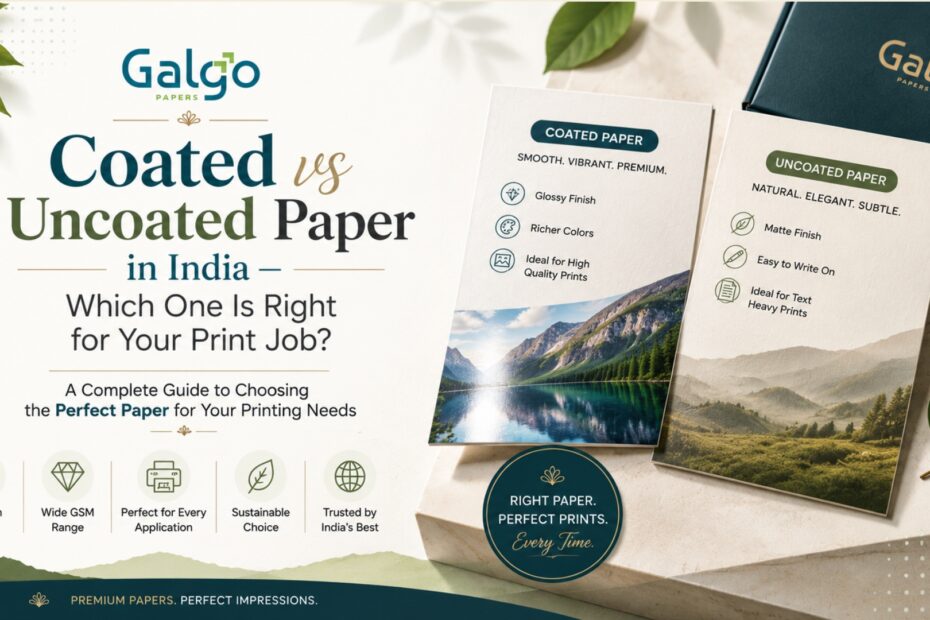
The decision between coated and uncoated paper in India is one of the most consequential and most consistently under-discussed choices in any print or packaging brief. Walk into any print shop in Delhi and describe a project: a luxury product catalogue, a packaging box, a wedding invitation, a company letterhead. The printer’s first question, or the one it should be, is: coated or uncoated? For a significant number of briefs, the paper type is decided by habit rather than intent. Art paper gets used for everything because it is familiar. The result is packaging that prints beautifully but feels wrong in hand, or stationery that photographs well but has none of the warmth the brief described.
The choice between coated and uncoated paper is one of the most consequential decisions in any print project. It changes how ink behaves on the surface, how the finished piece feels to hold, which finishing techniques are available, and what the paper communicates about the brand or project it represents. For designers, packaging teams, and print buyers navigating coated vs uncoated paper India options, this guide covers the decision from the ground up.
What Makes Paper Coated or Uncoated
All paper begins as an uncoated sheet of cellulose fibre formed into a flat surface. In an uncoated paper, the fibres are visible and accessible at the surface. The sheet is porous. Ink applied to it absorbs into the fibre structure, producing a slightly soft, slightly diffused print with a warm, organic appearance.
Coated paper receives an additional manufacturing step. A mineral coating typically clay combined with a binding agent is applied to one or both sides of the sheet. This coating fills in the micro-texture of the fibre surface, creating a sealed, non-porous layer. Ink applied to a coated surface sits on top of the coating rather than absorbing into it. The result is sharper dot definition, more vibrant colour reproduction, and a harder, more reflective surface.
Neither is inherently superior. Each is correct for specific applications and incorrect for others. The confusion arises when buyers default to one type without considering whether it serves the project’s actual needs.
The Three Types of Coated Paper Finish
Before choosing between coated and uncoated, it helps to understand that coated paper is not a single category. Three finish types dominate the Indian commercial print market:
Gloss coated paper has the highest surface reflectivity. Colours appear at maximum vibrancy and photographic images reproduce with the sharpest definition available in print. The surface feels smooth and slightly cool to the touch. Gloss coated is the most widely used paper in the Indian commercial print industry; it is the standard for magazine pages, product catalogues, premium flyers, and packaging that needs vivid colour reproduction.
Silk or satin coated paper reduces the reflectivity of gloss while retaining the ink holdout properties of a coated surface. Colours remain accurate and rich but without the mirror-like sheen. Silk coated is preferred by many designers for luxury brochures, premium packaging, and corporate publications where gloss feels too commercial and uncoated feels too casual.
Matte coated paper has the lowest reflectivity of the three coated types. The coating still provides excellent ink holdout and print quality, but the surface absorbs light rather than reflecting it. Matte coated produces an understated, sophisticated print result and is increasingly used by premium brands who want the technical performance of a coated paper without the visual sheen.
Most coated art paper distributors in Delhi stock all three finish types, though matte coated grades in specialty weights are less widely available than gloss at commodity level. Galgo Fine Papers carries Sappi Magno Volume across gloss and silk finishes, an imported European coated paper used by premium print houses and luxury brands who need consistent, high-grade performance across offset and digital press formats.
What Uncoated Paper Does That Coated Paper Cannot
Uncoated paper absorbs ink differently, and this produces a distinctly different printed result softer edges, slightly less saturated colour, and a warmth that many designers actively seek for specific applications.
For projects where the paper communicates authenticity, craftsmanship, or intimacy a wine label, a wedding invitation, a letterhead, a fine art book uncoated paper is often the stronger choice. The slightly imperfect, organic quality of ink on an uncoated surface aligns with the emotional register these projects intend to create. A sharp, hyper-vivid catalogue print on gloss coated paper would feel wrong for a handcrafted soap brand’s packaging insert. The paper choice needs to match the brand tone.
Uncoated paper also significantly outperforms coated paper for any application that requires writing or marking by hand. Ballpoint pens, fountain pens, and markers all perform unreliably on coated surfaces because the clay coating resists ink adhesion. Forms, notebooks, appointment cards, and any printed item that the recipient will write on should be uncoated.
For pressure-based printing techniques letterpress and engraving specifically uncoated paper is not just preferred, it is often required. Letterpress creates its characteristic impression by physically pressing a raised die into the paper surface. Uncoated papers accept this impression cleanly, producing the characteristic debossed effect that defines premium letterpress stationery. Coated papers resist the impression and produce inconsistent results.
The textured paper wholesale Delhi market linen, laid, felt-marked, and embossed papers is almost entirely uncoated. These textures exist precisely because uncoated surfaces can carry tactile character that coated papers smooth away.
The Finishing Question Where Coated and Uncoated Behave Very Differently
For brands specifying luxury packaging paper India or premium print materials, the choice between coated and uncoated paper intersects directly with finishing processes.
Hot foil stamping applying metallic or pigment foil to a paper surface under heat and pressure works on both coated and uncoated papers, but produces different results. On coated paper, foil stamping creates a clean, sharp-edged metallic impression with maximum contrast. On uncoated textured paper, the foil impression takes on a slightly more tactile, less mirror-like quality that many designers prefer for luxury stationery and packaging with an artisanal aesthetic.
Embossing creating a raised or recessed impression without ink is generally more effective on heavier uncoated papers. The fibre structure of uncoated paper holds an embossed impression more permanently than coated paper. For luxury wedding invitations, premium wine labels, and artisan packaging where embossing is a primary design element, uncoated specialty stocks from fine paper suppliers India are the standard specification.
Soft-touch lamination a post-press coating that produces a velvety, tactile surface is applied to coated papers. Printed on a gloss or silk coated base, then laminated with soft-touch film, the result is one of the most popular luxury finishes in Indian packaging right now. The combination of coated print performance with a soft-touch surface creates a premium result that is widely specified by cosmetics, electronics, and D2C brands.
UV spot coating applying a gloss or matte UV varnish to selected areas of a printed surface works most effectively on coated paper. The clear UV coating adheres cleanly to the sealed coated surface and creates striking contrast between coated and uncoated areas of the same piece.
A Decision Framework Which to Use for What
For image-heavy print with vivid colour accuracy such as product catalogues, packaging, premium flyers, and posters, coated paper is the default and the correct choice. The coated surface holds ink in precise dot formation, which is what makes photographs and graphic elements reproduce with maximum fidelity.
For text-heavy, tactile, or handmade-aesthetic applications letterheads, wedding invitations, wine labels, certificates, stationery, and corporate gifting inserts, uncoated specialty paper is typically the stronger choice. Fine paper suppliers Delhi NCR advise uncoated for any project where touch, warmth, or writability is part of the brief.
For luxury packaging, the answer is often both. A premium rigid box uses a coated board for its structural interior and a textured, uncoated specialty paper for the outer covering combining the structural performance of coated board with the tactile premium character of uncoated texture. This combination is standard practice among luxury packaging converters in India.
Buyers choosing coated vs uncoated paper India have a third option worth considering: specialty papers that blur the boundary. Matte coated papers with textured surfaces, rough-coated grades, and soft-coated uncoated sheets combine properties from both categories. These grades available through premium paper distributors in Okhla allow designers to specify a paper that performs like a coated surface but feels and looks like an uncoated one.
What FSC Certified Paper Looks Like in Both Categories
Both coated and uncoated papers are available with FSC certification. For brands building sustainable packaging paper India specifications, FSC certified coated boards for outer packaging and FSC certified uncoated specialty papers for inserts and stationery can be sourced through the same certified distributor, maintaining chain-of-custody integrity throughout the packaging stack.
Galgo Fine Papers, as India’s first FSC COC-certified paper trading company, supplies FSC certified grades across both coated and uncoated categories from its Okhla base. Eco friendly paper wholesale buyers including D2C brands, corporate gifting companies, and export-oriented packaging producers can source certified papers across finish types with full documentation from a single relationship.
Summary The Core Decision
Coated paper is defined by surface control ink stays on top, colours are vivid, images are sharp, the surface is smooth and uniform. It is the correct choice when visual performance and durability are the primary requirements.
Uncoated paper is defined by surface openness ink absorbs into fibre, the result is warmer and more organic, the surface can carry texture, and the material is writable. It is the correct choice when touch, authenticity, or handcrafted character is part of what the printed piece needs to communicate.
Most premium print and packaging briefs require both, specified correctly for each component of the project.
For sample packs, paper specifications, and sourcing guidance on coated vs uncoated paper India grades across all weights and finishes, contact Galgo Fine Papers at 27 Phase 2, Okhla Industrial Estate, New Delhi 110020 or visit galgopapers.com.
FREQUENTLY ASKED QUESTIONS
Q: What is the main difference between coated and uncoated paper?
Coated paper has a mineral layer (usually clay) applied during manufacturing, which seals the surface, reduces porosity, and makes ink sit on top for sharper, more vibrant print results. Uncoated paper has no surface coating it is porous, absorbs ink into the fibre, and produces a softer, warmer, more textured print result.
Q: Which paper is better for business cards coated or uncoated?
Both are used for business cards in India depending on the brand aesthetic. Coated art paper at 350–400 GSM is the most widely used for commercial business cards requiring vivid colour and sharp graphics. Uncoated textured paper at 300–350 GSM is preferred for premium, artisanal, or luxury brands where a tactile, organic surface is part of the brand identity.
Q: Can I write on coated paper?
Writing on coated paper is unreliable. The clay coating resists ink from ballpoint pens, fountain pens, and markers. Any printed item that the recipient needs to write on forms, appointment cards, notebooks, or personalised invitations should be printed on uncoated paper.
Q: Which paper is better for luxury packaging in India?
Premium luxury packaging typically uses coated board for the structural interior of rigid boxes and uncoated textured covering paper for the outer surface. This combination provides structural performance and tactile premium character simultaneously. Both categories are available in FSC certified grades through specialist fine paper suppliers in Delhi NCR.
Q: Is uncoated paper more eco-friendly than coated paper?
Both coated and uncoated papers are available with FSC certification and recycled content grades. Uncoated papers require less processing than coated grades and are widely perceived as more organic and eco-conscious. However, the most reliable environmental claim for any paper coated or uncoated is FSC certification and documented recycled content percentage, not the finish type alone.
Q: Where can I source coated and uncoated specialty paper in Delhi?
Galgo Fine Papers at 27 Phase 2, Okhla Industrial Estate, New Delhi 110020 supplies coated art paper, uncoated specialty papers, textured stocks, recycled grades, and FSC certified papers across both categories. As India’s first FSC COC-certified paper trading company, Galgo can supply full chain-of-custody documentation with every certified order.