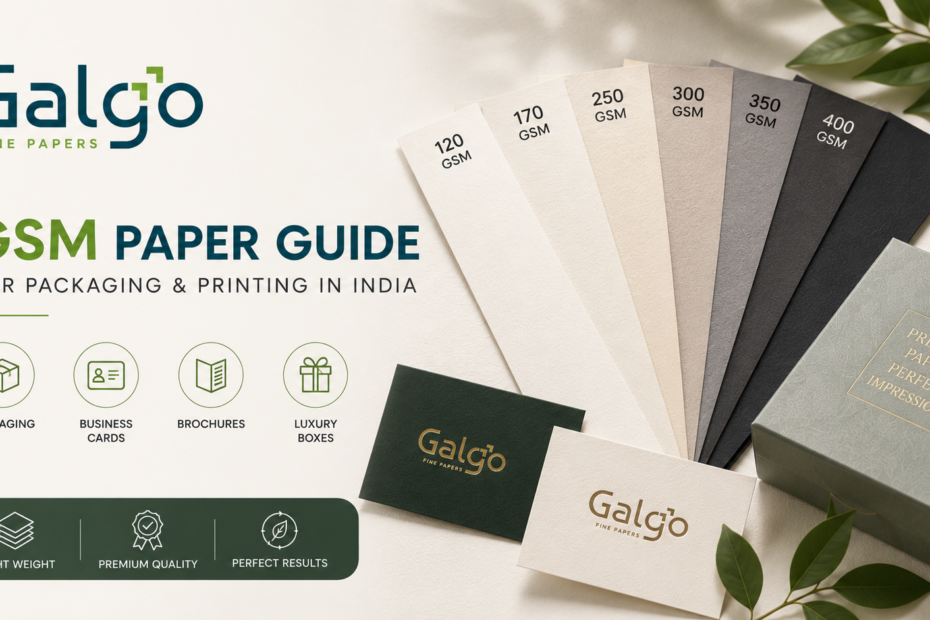
Choosing the right GSM paper in India is one of the most consequential — and most overlooked — decisions in any print or packaging project. A designer in Delhi finalises a gorgeous identity system for a new skincare brand. The packaging looks flawless on screen. But when the first print sample arrives, the box covering feels thin, the business card bends when held, and the brochure paper feels barely better than a handout. The brief was premium. The outcome is not. The error was made before a single design file went to press — it was made when nobody asked what GSM the paper should be.
GSM grams per square metre is the single most important number in any print specification. It determines how a piece of paper feels in the hand, how well it holds its shape, how it performs under different finishing processes, and whether a printed product communicates quality or undermines it. For brands, agencies, and print buyers searching for the right GSM paper for packaging India, the guidance available is often generic or outdated. This guide addresses the most common use cases specifically for the Indian print and packaging market.
What GSM Actually Means and Why It Is Not Just About Thickness
GSM measures the weight of one square metre of paper. A higher number means more material per unit area, which typically produces a thicker, stiffer, and heavier sheet. But GSM is not a direct measure of thickness two papers at 300 GSM can feel meaningfully different depending on their fibre composition, whether they are coated or uncoated, and their manufacturing process.
This is why experienced buyers at fine paper suppliers Delhi NCR do not discuss GSM in isolation. They discuss GSM alongside finish, texture, and end-use. A 300 GSM uncoated linen-textured paper for a wedding invitation produces a very different result than 300 GSM coated art paper for a brochure cover even though the weight is identical. The right GSM is always the right GSM for a specific application, not an absolute standard.
GSM Reference Guide by Application What India’s Print Industry Uses
Office Stationery and Letterheads: 90–120 GSM
The standard for corporate letterheads and compliment slips in India is 90–100 GSM. This weight is substantial enough to feel considered and premium but light enough to pass through laser and inkjet office printers without jamming. Standard copy paper in India runs at 70–80 GSM a letterhead at 90–100 GSM is immediately noticeable as an upgrade without being impractical for everyday mailing.
Specialty paper for branding at this weight includes uncoated fine papers with subtle textures such as laid or vellum finishes, which communicate brand identity through touch rather than heavy weight alone.
Flyers and Single-Sheet Inserts: 115–170 GSM
Single-page flyers, retail inserts, and promotional sheets in the Indian market are most commonly printed on 115–130 GSM coated art paper. This weight holds four-colour print well, resists tearing during distribution, and lies flat without curling. Going below 100 GSM for a full-colour flyer creates a visible ink show-through problem the design on one side bleeds visually into the reverse.
For premium brands using inserts inside packaging an insert card inside a D2C box, for example 170 GSM uncoated specialty stock provides a noticeably better feel than standard flyer paper and communicates that the brand invested in every detail.
Brochures and Catalogues: 130–200 GSM (inner), 250–300 GSM (cover)
Multi-page brochures use two different paper weights a lighter stock for interior pages and a heavier stock for the cover. The most common specification for Indian commercial brochures is 130–170 GSM for inner pages on coated art paper, with a 250–300 GSM cover stock in either coated or uncoated depending on the brand’s aesthetic.
Luxury product catalogues the kind produced by jewellery brands, premium automotive companies, or hotel groups typically specify 170–200 GSM inner pages on high-quality coated paper, with 300 GSM-plus cover boards that can accommodate foil stamping, embossing, or soft-touch lamination.
Premium paper distributors in Okhla supplying these grades include stocks from European mills such as Sappi’s Magno Volume range a coated paper with excellent bulk and print quality that performs reliably across both offset and digital presses.
Business Cards: 300–400 GSM
This is where paper weight has the most direct brand impact. A business card is handed to a person at close range. It sits in their hand for several seconds. The weight communicates instantly.
Research from India’s print market consistently shows that business cards at 300 GSM feel noticeably more premium than standard alternatives, with 350 GSM being the most widely specified weight by corporate clients and 400 GSM used by brands for whom a genuinely heavyweight, luxury card is a deliberate brand statement. Best paper distributors in Delhi NCR advise against going below 300 GSM for any card intended to communicate a premium positioning.
Textured paper at 300–350 GSM linen, laid, or felt-marked surfaces is increasingly popular among brand managers who want the card to be remembered through touch, not just visual design. Galgo Fine Papers supplies several textured paper wholesale Delhi grades in this weight range, including the Contrast Laid and Neo TMB ranges, specifically suited for business cards and premium stationery.
Luxury Packaging and Box Covering: 300–450 GSM
Luxury packaging paper India buyers from premium beauty brands to jewellery houses to high-end gifting companies work in the 300–450 GSM range for rigid box covering materials. At this weight, textured and embossed papers create a tactile premium experience that begins the moment the customer picks up the box.
For FSC certified paper India requirements in packaging increasingly common among listed companies and export-oriented brands Galgo Fine Papers supplies FSC COC-certified luxury packaging papers including recycled coated boards and textured covering stocks. As India’s first FSC COC-certified paper trading company, Galgo can provide full chain-of-custody documentation with every certified order.
Box covering boards in the 400–450 GSM range are the standard for high-end rigid gift boxes. At this weight, the paper provides structural integrity to the box, accepts hot foil stamping and embossing cleanly, and holds its shape even after repeated handling.
Common GSM Mistakes Indian Buyers Make
Several patterns emerge consistently when print buyers approach specialty paper suppliers in Okhla with failed print projects. The most frequent: specifying 250 GSM for a business card when the brand positioning requires 350 GSM or above. The second most common: using the same paper weight for the cover and inner pages of a brochure, which makes the publication feel flimsy when it should feel authoritative. The third: choosing paper weight without confirming compatibility with the printing press being used certain high-GSM papers do not run cleanly on digital presses without appropriate paper certification.
Buyers working with a specialist fine paper supplier Delhi NCR avoid these errors because the supplier advises on GSM alongside finish, press compatibility, and finishing suitability before paper is specified.
GSM Quick Reference India Print Market Standard
Use this as a starting point. All weights should be confirmed with samples before production:
| Application | Recommended GSM Range |
|---|---|
| Letterheads and stationery | 90–120 GSM |
| Single-page flyers | 115–130 GSM |
| Brochure inner pages | 130–170 GSM |
| Brochure or catalogue covers | 250–300 GSM |
| Business cards (standard) | 300–350 GSM |
| Business cards (premium) | 350–400 GSM |
| Packaging inserts and cards | 170–250 GSM |
| Box covering and rigid packaging | 300–450 GSM |
| Wedding and luxury invitations | 300–400 GSM |
Why Sampling Before Specification Matters
Every experienced designer and print buyer interviewed by specialty paper suppliers in India gives the same advice: never specify paper for a production run without holding a physical sample first. GSM ranges are a starting framework, not a substitute for the physical experience of a paper grade in hand.
Galgo Fine Papers, located at 27 Phase 2, Okhla Industrial Estate, New Delhi 110020, maintains a curated portfolio of coated, uncoated, textured, recycled, and specialty papers across the full GSM spectrum relevant to Indian packaging, branding, and print applications. Sample packs are available for all product ranges before any production commitment.
For enquiries on GSM paper for packaging India, specialty paper for branding, premium business card paper, and FSC certified stocks, contact Galgo Fine Papers at the Okhla Industrial Estate address or visit galgopapers.com.
FREQUENTLY ASKED QUESTIONS
Q: What is the best GSM for business cards in India?
The industry standard for business cards in India is 350 GSM on coated art paper. Premium brands often specify 400 GSM with lamination or spot UV finishing. Cards below 300 GSM tend to feel thin and communicate low brand value regardless of design quality.
Q: What GSM paper is used for packaging boxes in India?
Rigid box covering materials in India are typically specified at 300–450 GSM depending on the application. Luxury gift boxes commonly use 400–450 GSM textured or coated covering paper. Inner packaging cards and inserts are usually in the 200–300 GSM range.
Q: What GSM should a brochure cover be in India?
A brochure cover in the Indian print market is typically 250–300 GSM on coated art paper for standard applications. Luxury product catalogues and corporate presentations often use 300 GSM or above, with finishing processes such as embossing or soft-touch lamination applied to the cover stock.
Q: Where can I buy specialty paper in different GSM weights in Delhi NCR?
Galgo Fine Papers at 27 Phase 2, Okhla Industrial Estate, New Delhi 110020 supplies specialty, coated, uncoated, textured, and FSC certified papers across the full GSM range for packaging, business cards, brochures, and luxury applications. Sample packs are available before production commitment.
Q: Is higher GSM paper always better?
No, Higher GSM is appropriate when stiffness, weight, or structural integrity is required such as for business cards, packaging, and covers. For applications like office stationery, mailing inserts, or brochure inner pages, a lower GSM is the correct choice. The right GSM is always determined by the end-use application, the printing press, and the finishing process.